Wabun Morse Code Alphabet
Wabun is the Japanese Morse system for kana, conventionally shown in katakana. It is not merely an extension of International Morse: it assigns signals to Japanese kana and uses its own character inventory and transmission conventions.
Wabun Code Chart
| Character | Morse | Play |
|---|---|---|
| 0 | ----- | |
| 1 | .---- | |
| 2 | ..--- | |
| 3 | ...-- | |
| 4 | ....- | |
| 5 | ..... | |
| 6 | -.... | |
| 7 | --... | |
| 8 | ---.. | |
| 9 | ----. | |
| イ | .- | |
| ロ | .-.- | |
| ハ | -... | |
| ニ | -.-. | |
| ホ | -.. | |
| ヘ | . | |
| ト | ..-.. | |
| チ | ..-. | |
| リ | --. | |
| ヌ | .... | |
| ル | -.--. | |
| ヲ | .--- | |
| ワ | -.- | |
| カ | .-.. | |
| ヨ | -- | |
| タ | -. | |
| レ | --- | |
| ソ | ---. | |
| ツ | .--. | |
| ネ | --.- | |
| ナ | .-. | |
| ラ | ... | |
| ム | - | |
| ウ | ..- | |
| ヰ | .-..- | |
| ノ | ..-- | |
| オ | .-... | |
| ク | ...- | |
| ヤ | .-- | |
| マ | -..- | |
| ケ | -.-- | |
| フ | --.. | |
| コ | ---- | |
| エ | -.--- | |
| テ | .-.-- | |
| ア | --.-- | |
| サ | -.-.- | |
| キ | -.-.. | |
| ユ | -..-- | |
| メ | -...- | |
| ミ | ..-.- | |
| シ | --.-. | |
| ヱ | .--.. | |
| ヒ | --..- | |
| モ | -..-. | |
| セ | .---. | |
| ス | ---.- | |
| ン | .-.-. | |
| ゛ | .. | |
| ゜ | ..--. | |
| ー | .--.- | |
| 、 | .-.-.- | |
| 」 | .-.-.. | |
| ( | -.--.- | |
| ) | .-..-. |
How to Use Wabun Code
The chart uses the traditional Iroha ordering to help look up kana; send a message's kana in its intended textual order, using each listed code group in sequence. A voiced kana is sent as its base kana followed by the dakuten mark: ガ is .-.. .., or カ (.-..) followed by ゛ (..). A semi-voiced kana works the same way: パ is -... ..--., or ハ (-...) followed by ゜ (..--.).
The digits 0 through 9 reuse the same dot-and-dash sequences as International Morse code. Kana do not: .- is イ in Wabun and A in International Morse. Because several sequences are shared while their characters differ, do not mix the systems in an unlabeled stream; identify the system or use an agreed switch between Japanese and International text.
Printable Wabun Morse Code Chart
This printable A4 landscape chart includes 48 katakana plus separate dakuten and handakuten marks in a right-to-left gojuon layout.
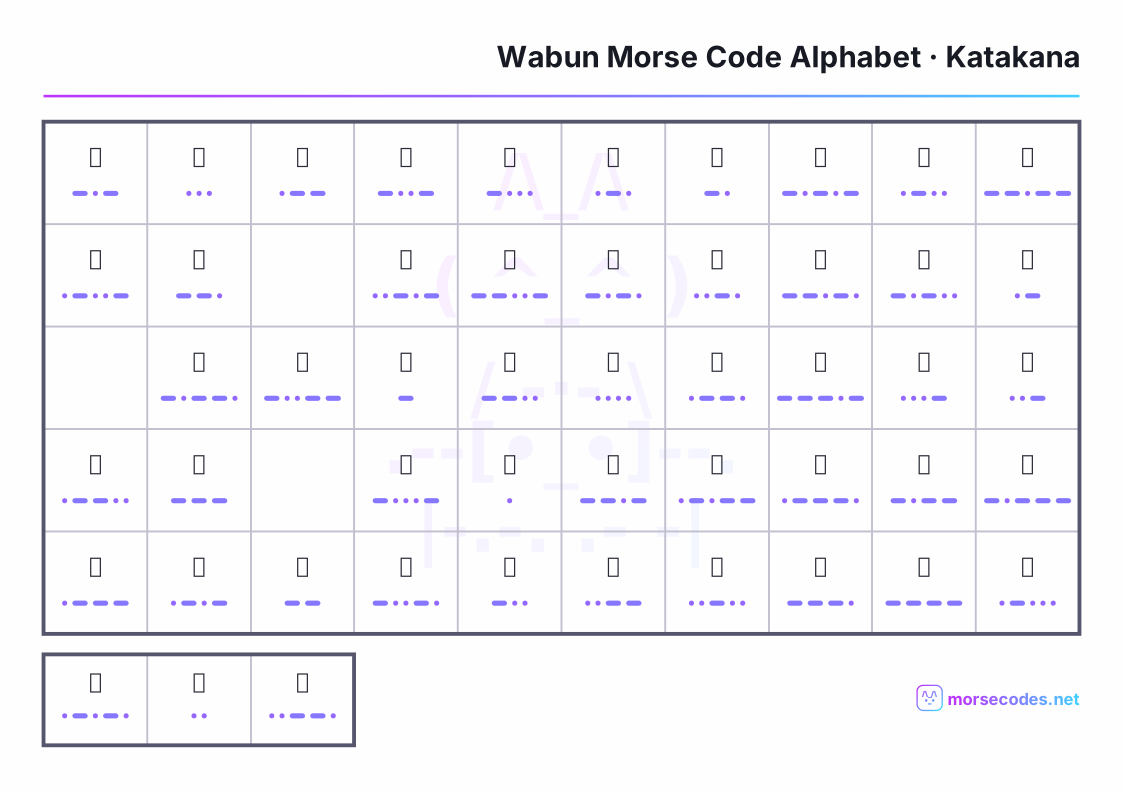
History of Wabun Code
Wabun was developed in Japan for telegraphy in Japanese, where kana could be transmitted directly instead of forcing every message into Latin letters. Its kana chart follows the Iroha order, a traditional Japanese ordering, rather than the Latin alphabetic order used by International Morse charts.
The history of early Japanese telegraphy is documented by the Postal Museum's research on early Japanese communications. Wabun assignments and operating conventions are preserved in Japanese radio rules and amateur-radio reference material, including the e-Gov radio-station rules and the JARL Morse chart.
Frequently Asked Questions
Does Wabun cover hiragana or katakana?
Wabun encodes kana. Charts conventionally display katakana, and equivalent hiragana can be normalized to the corresponding kana values for transmission.
How are dakuten and handakuten sent?
Send the base kana first, followed by a separate dakuten (゛) or handakuten (゜) code group. For example, ガ is カ plus dakuten, and パ is ハ plus handakuten.
Do Wabun digits use the International Morse codes?
Yes. The digits 0 through 9 use the same sequences as International Morse, even though the kana assignments are different.
Can Wabun and International Morse be mixed in one message?
They can be used together only with a clear convention for identifying or switching systems. Shared sequences can mean different characters, so an unlabeled mixture is ambiguous.
How is Wabun different from International Morse?
International Morse maps signals to Latin letters, digits, punctuation, and symbols. Wabun is a Japanese kana system with its own assignments, Iroha-oriented chart, and kana marks, while sharing the digit sequences.