Learn Morse Code
Practise while you read: alphabet practice builds written dot-and-dash recall; listening practice builds recognition by sound. Both cover A–Z in seven groups and keep separate progress in this browser.
We will begin by hearing each character as one complete sound rhythm and gradually connecting that rhythm to its letter or digit. Along the way, we will explore International Morse timing, practical memory methods, the structure of A-Z and 0-9, and a flexible 14-day routine you can adapt as your recognition grows.
Choose International Morse Code Before You Start
This page teaches International Morse Code, the system used for Latin letters, numbers, punctuation, and common procedural signals. The language you speak or read is separate from the Morse alphabet: English words can be sent with International Morse, while Japanese, Korean, Arabic, and other writing systems may use different Morse alphabets or adaptations.
For this lesson, we will keep the resource, audio, and practice set on International Morse. The Morse alphabets guide introduces Wabun and other systems whenever you are ready to compare them; here, we can focus on building a reliable memory for International Morse.
Learn Morse Code as Sound and Timing
A Morse character is a short rhythm made from two signal lengths: a dit (dot) and a dah (dash). A dot lasts 1 timing unit and a dash lasts 3. The silence inside a character lasts 1 unit, the silence between characters lasts 3 units, and the silence between words lasts 7 units. The diagram below applies those durations to A ET, with each grid cell representing 1 timing unit.
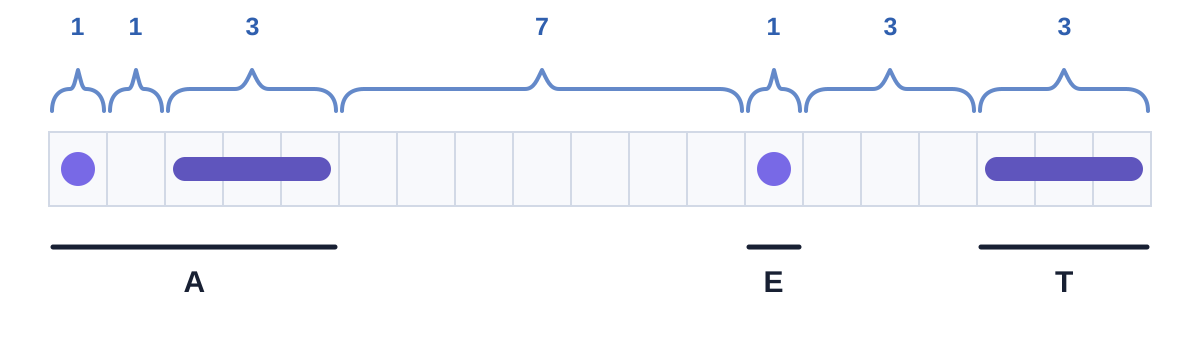
Reading from left to right, A is .-: its dot occupies 1 cell, the intra-character gap between its two signals occupies 1 cell, and its dash occupies 3 cells. That short silence separates the signals while keeping them together as one letter.
After A, 7 empty cells create a word gap before E, so the diagram reads A ET rather than AET within one word. E contributes a 1-unit dot. Because E and T belong to the same word, a 3-unit character gap separates them, followed by T's 3-unit dash. Signal length tells us whether we hear a dot or dash, while silence length tells us where a character or word ends. In listening practice, hear the signals and their gaps as one complete rhythm instead of merely counting marks.
How to Remember Morse Code
Learn Each Character as a Sound Rhythm
We will build receiving practice around one direct association: hear a complete rhythm, then identify its character. Letting the sound finish before naming it gives you the whole contour. A single short pulse and a single long pulse feel different, and pairs or mixed patterns develop their own shapes. With repetition, the character can begin to arrive like a familiar short spoken word instead of a calculation.
Receiving happens continuously over time. Translating a rhythm into written dots and dashes before inspecting the marks adds a step between the sound and its character. That step can help when we check a slow example on paper; for continuous messages, audio, tapping, and imagined sound help duration and spacing become part of the memory itself.
Inside each character, we keep the dits, dahs, and short gaps in their proper compact relationship. At first, you can widen the spaces between characters and words to create thinking time, then gently reduce that extra space as recognition becomes more immediate. Each round helps the complete sound pattern point more directly to its character.
Use Mnemonics as Temporary Support
Verbal and visual mnemonics can be useful entry points. They often make a written pattern easier to retain during casual learning, written recall, or the first few encounters with a character. A story, word shape, or spoken rhythm may give you a more concrete place to begin.
We can use that aid as scaffolding while the sound association develops. A mnemonic that mirrors a character's actual International rhythm can remind you which signal is short and which is long; for example, a two-part cue for a short-then-long pattern should preserve that order. Comparing a new mnemonic with a reliable International reference gives you an accurate association from the start.
As sound recognition grows, we can gradually shorten the chain from sound to dots and dashes, then to a mnemonic, and finally to the character. After a mnemonic helps you learn a new item, try some reviews where you play or tap the rhythm, answer with the character, and check afterward. The mnemonic can stay available for a difficult item while direct recall takes on more of the work.
Combine the Koch Method with Farnsworth Timing
The Koch method and Farnsworth timing help with different parts of the same beginner task. Koch practice presents a small current character set at a chosen target character speed, so each character keeps its complete sound shape. We mix those characters in random order and add a new one when recognition feels reasonably stable.
Farnsworth timing controls the available thinking time. It preserves the target timing of dits, dahs, and gaps inside each character, but leaves more space between characters and words at first to lower the effective text speed. As recognition becomes more immediate, reduce that extra spacing. This preserves the sound shape of each character instead of stretching it until every mark can be counted.
The methods work well together: Koch guides the growth of the character set and preserves a target character speed, while Farnsworth provides extra space between complete characters for processing. You can adjust the pace around your own recognition. When most answers still need a mnemonic or tree lookup, spend a few more rounds with the current group and let the sound-character connection become more natural.
Practice Small Mixed Groups with Active Recall
We introduce a few characters at a time, vary their order, and add another small group as the current rhythms become familiar. A shuffled set removes the hint supplied by an A-to-Z recital. Mixing comfortable characters with newer ones also keeps earlier rhythms active.
Each repetition can become an active-recall question: hear or make the rhythm, pause, say or write the character, and then look at the answer. Answering first shows which rhythms would benefit from another pass. When one goes astray, replay it once and return it to the mixed group so it can become familiar in context.
You can compare rhythms that differ by one change, then place them back into a shuffled set. This gives you both a close contrast and practice with the complete rhythm in a fresh order. A short note about slow or uncertain characters is enough to guide the next session.
Review in Short, Spaced Sessions
Short sessions that return regularly are usually easier to keep than one long cram. Spaced review simply means revisiting a character after a break, before its association fades completely. A few minutes later in the day, tomorrow, and later in the week give you chances to retrieve the rhythm again in a fresh context.
Begin with a modest routine you can return to, notice which items take longer to answer, and bring those back a little more often. Ending while your decisions still feel accurate gives the next session a solid starting point. Brief reviews that mix old and new rhythms will steadily prepare you for the next group.
| Method | Best for | Main limitation |
|---|---|---|
| Sound/rhythm | Direct recognition of transmitted Morse | Needs repeated listening or sending practice |
| Mnemonic | Initial association, casual learning, and written recall | Can become an extra translation step |
| Koch + Farnsworth | Expanding a small set while preserving the target character speed | Pace works best when adjusted to recognition |
| Small mixed groups/active recall | Separating similar characters and finding weak items | Most useful when you answer before checking |
| Spaced review | Keeping earlier characters available over time | Benefits from regular returns |
Learn International Morse Letters by Structure
Next, we will use the written patterns to see how the letters are structured and to check our answers, while complete sound rhythms remain at the center of receiving practice. We begin with a small mixed group and expand it as recognition settles.
Start with Clear Contrasts
On day 1, we begin with E and T: one short signal and one long signal. When those two feel steady in random order, we add I, M, A, and N to the same session.
| Character | Code | Rhythm contour |
|---|---|---|
| E | . | one short signal |
| T | - | one long signal |
| I | .. | two short signals |
| M | -- | two long signals |
| A | .- | short then long |
| N | -. | long then short |
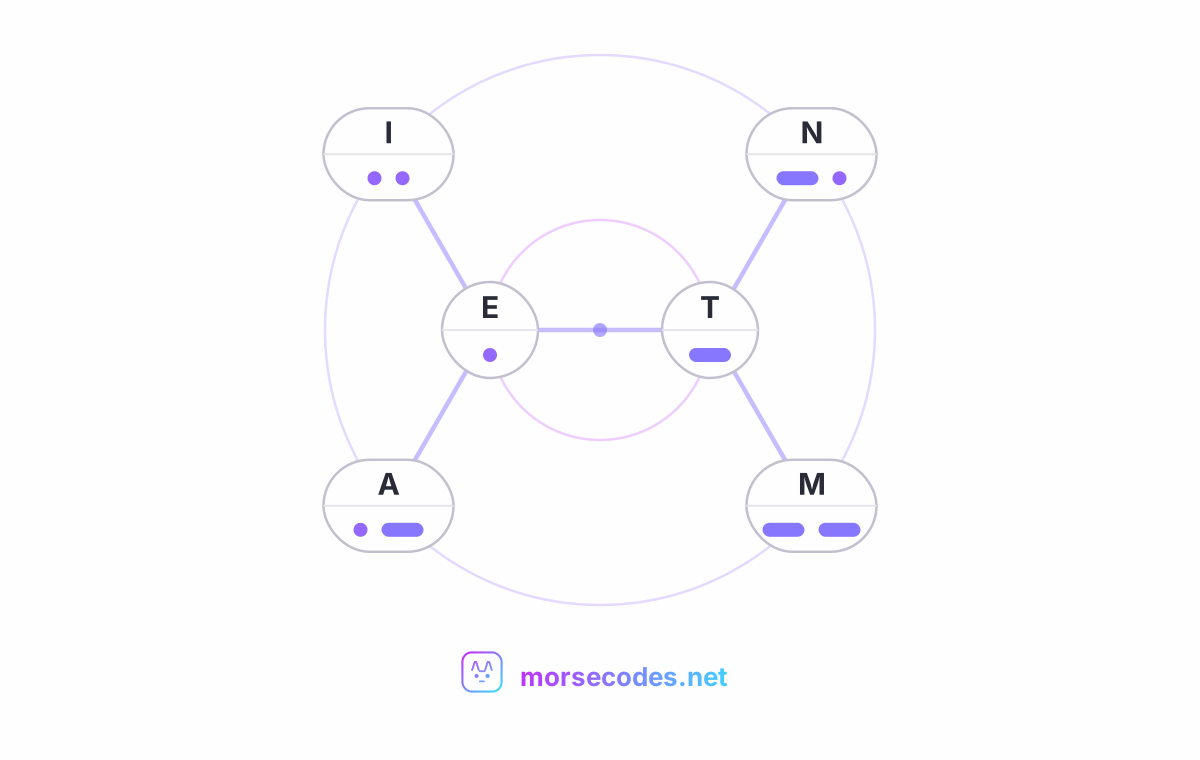
This starter tree supports structural study, lookup, and written recall. Once the first branches make sense, we return to listening and let the diagram reinforce the direct connection between a complete rhythm and its letter.
First, listen to the fixed starter sequence for its contours. On the next play, you can answer each letter after its complete rhythm ends.
Build the Three-Signal Group
These eight letters introduce new three-signal contours. After meeting them in the table, we mix them with the starter letters so every rhythm can appear in a fresh position.
| Character | Code | Rhythm contour |
|---|---|---|
| S | ... | three short signals |
| U | ..- | two short signals then long |
| R | .-. | short, long, short |
| W | .-- | short then two long signals |
| D | -.. | long then two short signals |
| K | -.- | long, short, long |
| G | --. | two long signals then short |
| O | --- | three long signals |
Listen to the fixed three-signal sequence once for its contrasts, then replay it and identify each completed contour before returning to the table.
Add Four-Signal Groups
The remaining letters use four signals. We will meet them in three small groups, giving each set of four rhythms its own practice before we mix all the letters together.
Group 1: H, V, F, L
| Character | Code |
|---|---|
| H | .... |
| V | ...- |
| F | ..-. |
| L | .-.. |
Listen once for the overall contours. On the next play, answer after each completed rhythm and then check the table.
Group 2: P, J, B, X
| Character | Code |
|---|---|
| P | .--. |
| J | .--- |
| B | -... |
| X | -..- |
This group includes rhythms that begin with both dots and dashes. Let each full character end before answering so its contour has time to settle.
Group 3: C, Y, Z, Q
| Character | Code |
|---|---|
| C | -.-. |
| Y | -.-- |
| Z | --.. |
| Q | --.- |
After this group, we have met every letter from A to Z. Use the player to settle these four new rhythms, then begin shuffling all three groups together.
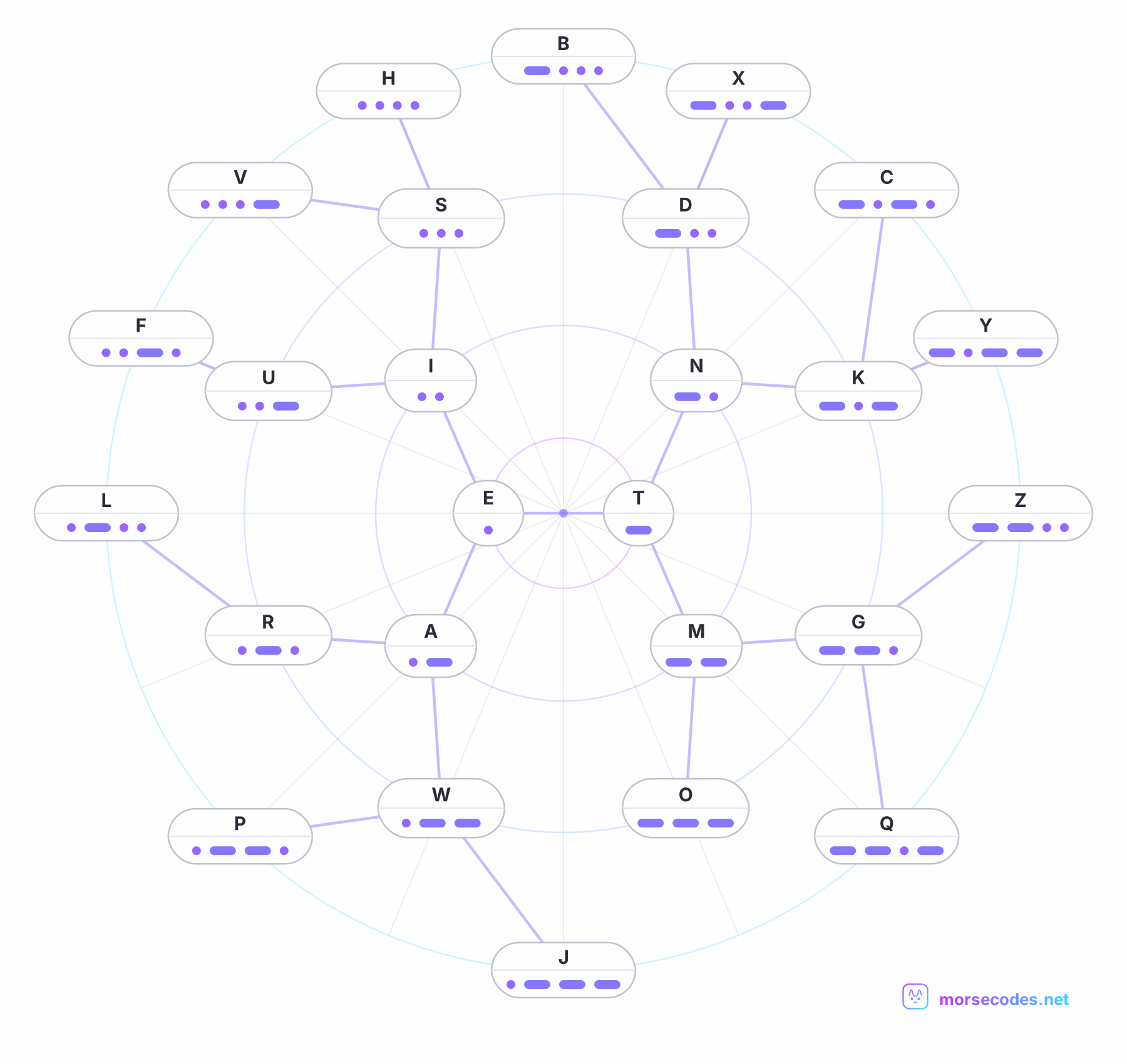
This diagram arranges A-Z in four concentric rings according to the number of signals in each Morse code character. The first ring contains letters made with one dot or dash, the second contains letters with two signals, the third contains letters with three, and the fourth contains letters with four. Moving outward adds one signal to the end of the existing code: each radiating branch forms part of the tree, with an upward branch adding a dot (.) and a downward branch adding a dash (-).
To use the diagram, begin near the center and read the target code one signal at a time. Follow the branch upward for a dot or downward for a dash, moving to the next ring with every signal until you reach the letter. You can also trace inward from a letter to compare its structure with neighboring letters. After using the diagram as a memory aid, return to listening practice and recognize each character as one complete rhythm.
To check your recall of the written patterns, try guided A–Z letter practice. To recognize letters directly from their sounds, use the listening course. The two courses save progress separately.
Read Short Latin-Script Words
International Morse represents the Latin letters we choose to send, so ME, TIME, TEAM, and NAME give us short practice words once their letters are in the current set.
The fixed TIME sequence is a character-boundary exercise: hear where each complete rhythm ends before naming T, I, M, E.
Learn Morse Code Numbers by Rhythm Patterns
Digits use five-signal patterns. From 1 through 5, each digit progressively gains dots and loses dashes; from 6 through 0, each gains dashes and loses dots. We can use that pattern to understand the structure first, then practice hearing each digit as a complete rhythm.
| Digit | Code | Rhythm contour |
|---|---|---|
| 1 | .---- | one dot then dashes |
| 2 | ..--- | one more leading dot |
| 3 | ...-- | dots form larger opening group |
| 4 | ....- | one ending dash |
| 5 | ..... | all dots |
| 6 | -.... | one leading dash then dots |
| 7 | --... | one more leading dash |
| 8 | ---.. | dashes form larger opening group |
| 9 | ----. | one ending dot |
| 0 | ----- | all dashes |
In the fixed 1-through-5 sequence, listen for the changing opening group, then answer each whole rhythm.
In the fixed 6-through-0 sequence, let each complete contour guide the answer.
Practice Receiving and Sending Separately
Receiving is the path from a sound rhythm to a character. Sending takes the reverse path: choose a character, then make its correctly timed signal. The two directions support each other, and separate practice gives each one room to grow.
We can give each direction its own round, first with the current set and later with the full A-Z and 0-9 set. In a receiving round, listen and answer before checking the code. In a sending round, choose a character, then tap, key, or flash its complete rhythm with the correct signal and gap lengths before checking a reference or playback. Separate rounds help us see whether a hesitation comes from recognition, recall, or timing.
A 14-Day A-Z and Number Starter Plan
Start with 20-30 minutes a day and adjust the session to your concentration and recall. When a group still feels uncertain, spend another day with it; when most rhythms lead naturally to their characters, move on and keep the earlier groups in the mix.
| Day | Focus |
|---|---|
| Day 1 | E/T, then I/M/A/N once E/T are stable. |
| Day 2 | S/U/R/W plus old characters. |
| Day 3 | D/K/G/O and mix 1-3 signal characters. |
| Day 4 | Randomized review of 1-3 signal characters. |
| Day 5 | H/V/F/L. |
| Day 6 | P/J/B/X. |
| Day 7 | C/Y/Z/Q. |
| Day 8 | Randomized A-Z without table or tree. |
| Day 9 | Digits 1-5. |
| Day 10 | Digits 6-0. |
| Day 11 | Mixed letter/digit receiving. |
| Day 12 | Words, call signs, and short letter-number strings. |
| Day 13 | Sending, timing, and spacing separately. |
| Day 14 | Full review and record slow or confused characters. |
Ways to Make Morse Practice Smoother
- Shuffle the characters in each round so you practice unpredictable recognition as well as the A-Z structure.
- Hear the complete rhythm first, then use written dots and dashes to check the answer.
- Treat the 14-day routine as an adjustable route and spend another day with a group whenever it still feels uncertain.
- Use the starter and complete trees for structure, lookup, and visual memory, then return to the complete sound during listening.
- Add a few new characters at a time so similar rhythms have room to separate.
- Listen to spacing inside characters and between characters and words as part of the message.
- Give receiving and sending their own practice rounds so both directions develop.
- As a mnemonic finishes its first job, add more direct sound-to-character answers.
- Confirm the Morse alphabet before a session so every sound stays connected to the intended character set.
Continue Learning Morse Code
After working through A-Z and the digits, you can use the International Morse converter to convert your own short text and play a fixed message. The complete International Morse lookup is ready whenever you want to check an unfamiliar character.
The Morse phrases collection gives you applied messages to recognize and send, while the sound and light signaling tool lets you explore the same timing with audio and light. When you are ready for Wabun or another Morse system, the Morse alphabets guide introduces its own character mappings. Once the basic rhythms feel dependable, CW offers a later path into operating habits and speed practice.
Morse Code Learning FAQ and Sources
What is the easiest way to remember Morse code?
For receiving, learn each character as a complete sound rhythm and answer with the character before checking. Start with a small mixed group, not a long alphabet sequence, and bring uncertain items back in later short sessions.
Should I learn Morse as sounds or written dots and dashes?
Use written dots and dashes as a reference, especially when checking a character. For listening, aim to recognize the whole sound and its spacing directly, because a transmission does not arrive as a printed chart.
Are mnemonics useful for learning Morse code?
Yes. A verbal or visual mnemonic can make a first association easier, particularly for written recall or casual study. Treat it as temporary support and keep adding direct sound-to-character practice so it does not become the only route to an answer.
Can I start practicing with a small group of letters?
Yes. A small set is enough to practice timing, recognition, and sending. Add another group when the current rhythms are comfortable in random order, and return to the complete tree or lookup table whenever you want a structural review.
How should I adapt the 14-day plan to my pace?
Treat the fourteen days as a route through the material rather than a pace you have to match. Repeat a day, divide it into shorter sessions, or revisit a difficult group whenever you need to; let your recognition guide when you move forward.
Where can I start learning Wabun Morse code?
This page guides you through International Morse Code. When you are ready to explore Wabun or another system, begin with the Morse alphabets guide and follow its dedicated resources.