International Morse Code Alphabet Chart
International Morse code represents characters with short and long signals, conventionally written as dots (.) and dashes (-). This chart renders A-Z, digits 0-9, and the punctuation and symbols included below; it is not a complete list of procedural signals.
If you want to remember the signals instead of only looking them up, follow the sound-first beginner Morse code guide.
International Morse Code Chart
| Character | Morse | Play |
|---|---|---|
| 0 | ----- | |
| 1 | .---- | |
| 2 | ..--- | |
| 3 | ...-- | |
| 4 | ....- | |
| 5 | ..... | |
| 6 | -.... | |
| 7 | --... | |
| 8 | ---.. | |
| 9 | ----. | |
| A | .- | |
| B | -... | |
| C | -.-. | |
| D | -.. | |
| E | . | |
| F | ..-. | |
| G | --. | |
| H | .... | |
| I | .. | |
| J | .--- | |
| K | -.- | |
| L | .-.. | |
| M | -- | |
| N | -. | |
| O | --- | |
| P | .--. | |
| Q | --.- | |
| R | .-. | |
| S | ... | |
| T | - | |
| U | ..- | |
| V | ...- | |
| W | .-- | |
| X | -..- | |
| Y | -.-- | |
| Z | --.. | |
| . | .-.-.- | |
| , | --..-- | |
| ? | ..--.. | |
| ' | .----. | |
| ! | -.-.-- | |
| / | -..-. | |
| ( | -.--. | |
| ) | -.--.- | |
| & | .-... | |
| : | ---... | |
| ; | -.-.-. | |
| = | -...- | |
| + | .-.-. | |
| - | -....- | |
| _ | ..--.- | |
| " | .-..-. | |
| $ | ...-..- | |
| @ | .--.-. |
Ready to recall the letters without the chart? Try Morse code alphabet practice to learn A–Z in seven groups, with exercises for recognising and writing dots and dashes.
How to Use International Morse Code
Use one time unit for a dot and three time units for a dash. Leave a one-unit gap between elements of the same character, a three-unit gap between characters, and a seven-unit gap between words. Those 1 / 3 / 7 timing relationships make the signal intelligible whether it is sent by sound, light, radio, or key.
Write letters in either case: Morse encodes a and A the same way. Consult the chart for the rendered letters, digits, punctuation, and symbols, and keep the character and word gaps distinct when copying or sending a message.
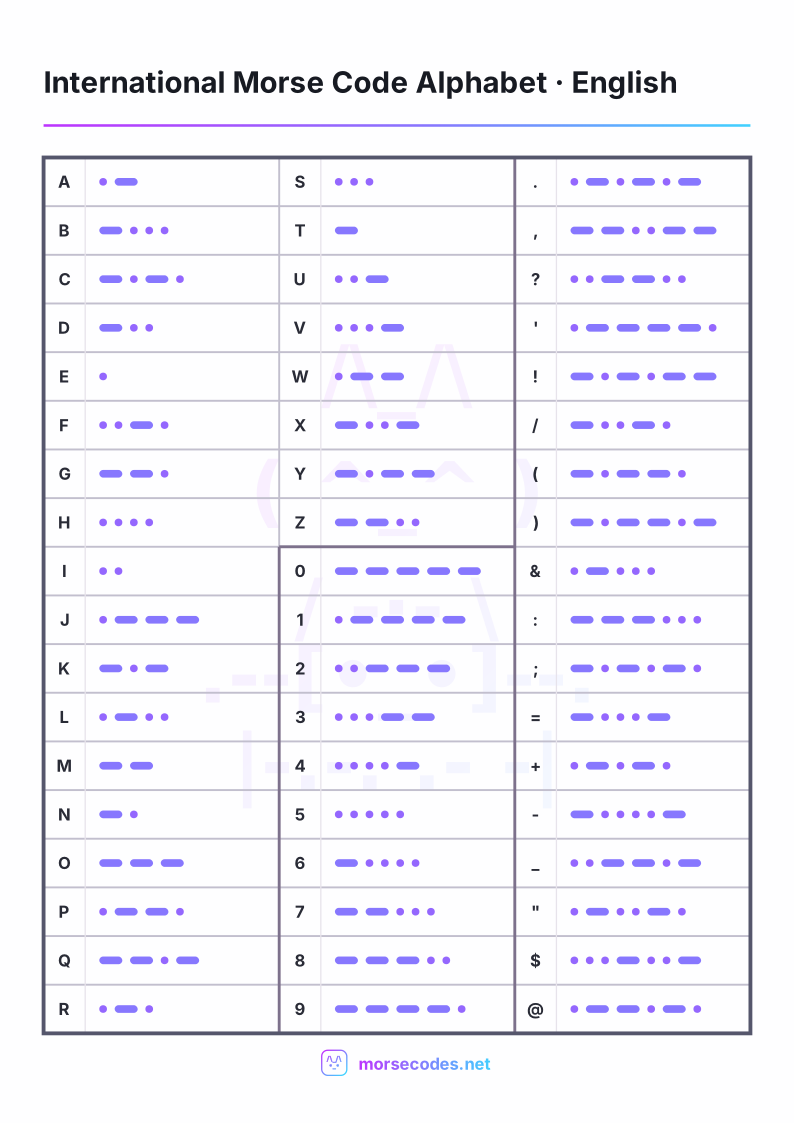
Printable International Morse Code Chart
This printable A4 chart includes the International Morse code alphabet A-Z, numbers 0-9, punctuation, and symbols supported by this site.
History of International Morse Code
The original American Morse system was used by early landline telegraphs in the United States. It differed from the later international system in both assignments and timing conventions. Friedrich Clemens Gerke's 1848 revision for the Hamburg-Cuxhaven line simplified that earlier code and became the basis for the Continental system.
Telegraph administrations adopted an international standard at the Paris conference in 1865, the same year the International Telegraph Union was founded. The modern technical reference is ITU-R M.1677-1, which defines the International Morse character set and timing rules for radiocommunication services. For the 1865 institutional adoption, see the ITU's history of its founding.
Frequently Asked Questions
What does this International Morse code chart include?
It includes the A-Z letters, digits 0-9, and the punctuation and symbols rendered by this site's International chart. Procedural signals and language-specific extensions have their own conventions and are not represented here as a complete list.
Does upper or lower case change Morse code?
No. International Morse does not distinguish upper case from lower case; A and a use the same signal.
Why does spacing matter in Morse code?
Spacing separates elements, characters, and words. The one-, three-, and seven-unit gaps prevent a continuous stream of dots and dashes from becoming ambiguous.
What is the difference between American Morse and International Morse?
American Morse is the earlier North American landline system, with different character assignments and timing features. International Morse follows the later Gerke and Continental line and uses the standardized timing described by the ITU.
Is International Morse code still used?
It remains a defined international radiocommunication standard and is used by radio operators, learners, and in signaling contexts. Its current definition is maintained in ITU-R M.1677-1.